Olympic Centenary £2 (2008)
The London Olympic Centenary £2 from 2008 marks a hundred years since London first hosted the Olympic Games in 1908. Far fewer were struck than of most £2 coins of its time, so it is one of the circulating designs people check their change for. It is one of the 85 £2 designs struck since 1986.
Olympic Centenary £2 value
- Circulated
- typical £5, range £4.80 to £9
- Uncirculated
- typical £18, range £12 to £28
Worked out from 15 published prices (6 price guides, 5 sold-price reports and 4 dealer prices), each condition from its own prices, checked in September 2026.
Rarity rank 8 of 44 ranked £2 designs, rarest first
Rarity: RareBecause far fewer were struck than for most circulating £2 designs, even a used Olympic Centenary coin sells above face value. The lane lines and the small numbers across them wear quickly, so a coin with crisp lanes grades better. Scratches across the smooth track surface are the other common fault. Brilliant uncirculated coins from Royal Mint packs sell for more again, and an unopened pack is the best of all.
Olympic Centenary £2 mintage and rarity
With 910,000 struck for circulation, the Olympic Centenary £2 is the eighth rarest of the 44 ranked £2 designs and has the 36th lowest mintage of all 194 circulating UK designs. That puts it in the Rare band, for mintages 500,000 to 999,999.
The next rarer £2 is the Olympic handover, London to Rio £2, with 845,000 struck, and the next more common is the Olympic handover, Beijing to London £2, with 918,000 struck.
How to spot an Olympic Centenary £2
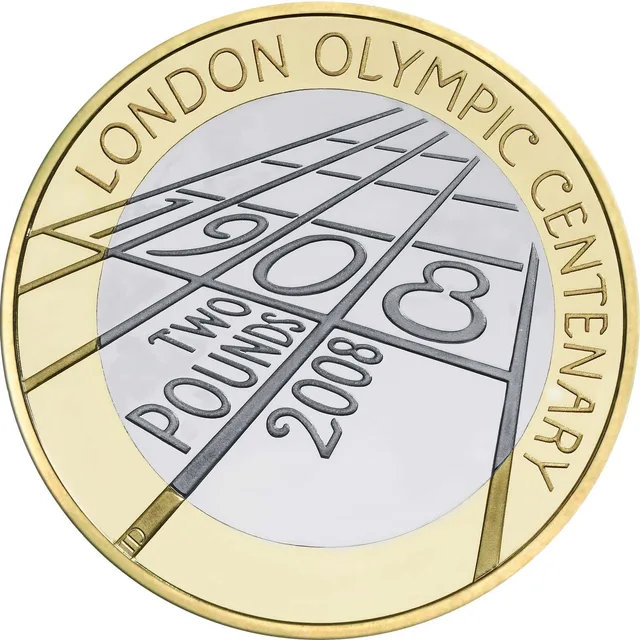
Look for a running track in perspective, with four lanes sweeping from the bottom left to the top right of the coin. The lane numbers spell out 1908, and TWO POUNDS 2008 runs along the lanes. LONDON OLYMPIC CENTENARY curves round the upper right. The edge reads THE 4TH OLYMPIAD LONDON. The Olympic handover £2 coins of 2008 and 2012 are different designs, so check for the track before assuming you have this one.
Olympic Centenary £2 design
London hosted the Olympic Games for the first time in 1908, after Rome, the original host, withdrew following an eruption of Mount Vesuvius. Great Britain finished at the top of the medal table. The Royal Mint marked the centenary in 2008 with this £2 coin, designed by Thomas T Docherty, and issued a separate £2 for the Olympic handover in the same year. Docherty's reverse looks down a running track: four lanes start at the bottom left and narrow into the distance towards the top right. The lane numbers read 1908 across the lanes, and TWO POUNDS 2008 is written along them. LONDON OLYMPIC CENTENARY runs round the upper right half of the coin. The edge is lettered THE 4TH OLYMPIAD LONDON, recalling the Games of a century before. The coin has a cupro-nickel centre and a nickel-brass ring, with Ian Rank-Broadley's portrait of Queen Elizabeth II on the obverse.
Olympic Centenary £2 specifications
- Denomination
- £2
- Year
- 2008
- Type
- Commemorative
- Issue
- Issued for circulation
- Occasion
- Centenary of the 1908 London Olympic Games
- Designer
- Thomas T Docherty
- Composition
- Cupro-nickel centre, nickel-brass outer ring
- Weight
- 12 g
- Diameter
- 28.4 mm
- Shape
- Round
- Edge
- Milled, with incuse inscription THE 4TH OLYMPIAD LONDON
- Obverse
- Elizabeth II, fourth portrait by Ian Rank-Broadley
Olympic Centenary £2 questions
Is the 2008 Olympic Centenary £2 rare?
It is one of the scarcer circulating £2 coins, with far fewer struck than most designs of its time, although it can still turn up in change.
What is the difference between the Olympic Centenary £2 and the Olympic handover £2?
The Olympic Centenary coin shows a four-lane running track and marks the London Games of 1908. The handover coins of 2008 and 2012 are separate designs that mark the passing of the Olympic Games from one host city to the next.
Who designed the London Olympic Centenary £2?
Thomas T Docherty designed the running track reverse; the obverse shows the Queen as portrayed by Ian Rank-Broadley.